 Swahili (East Africa)
 Dutch (nl-NL)
 English (United Kingdom)
Stories of hope from Ngoliba
Read how children, families and staff at The Ark work every day towards recovery, growth and new opportunities.
Select your language
Read how children, families and staff at The Ark work every day towards recovery, growth and new opportunities.
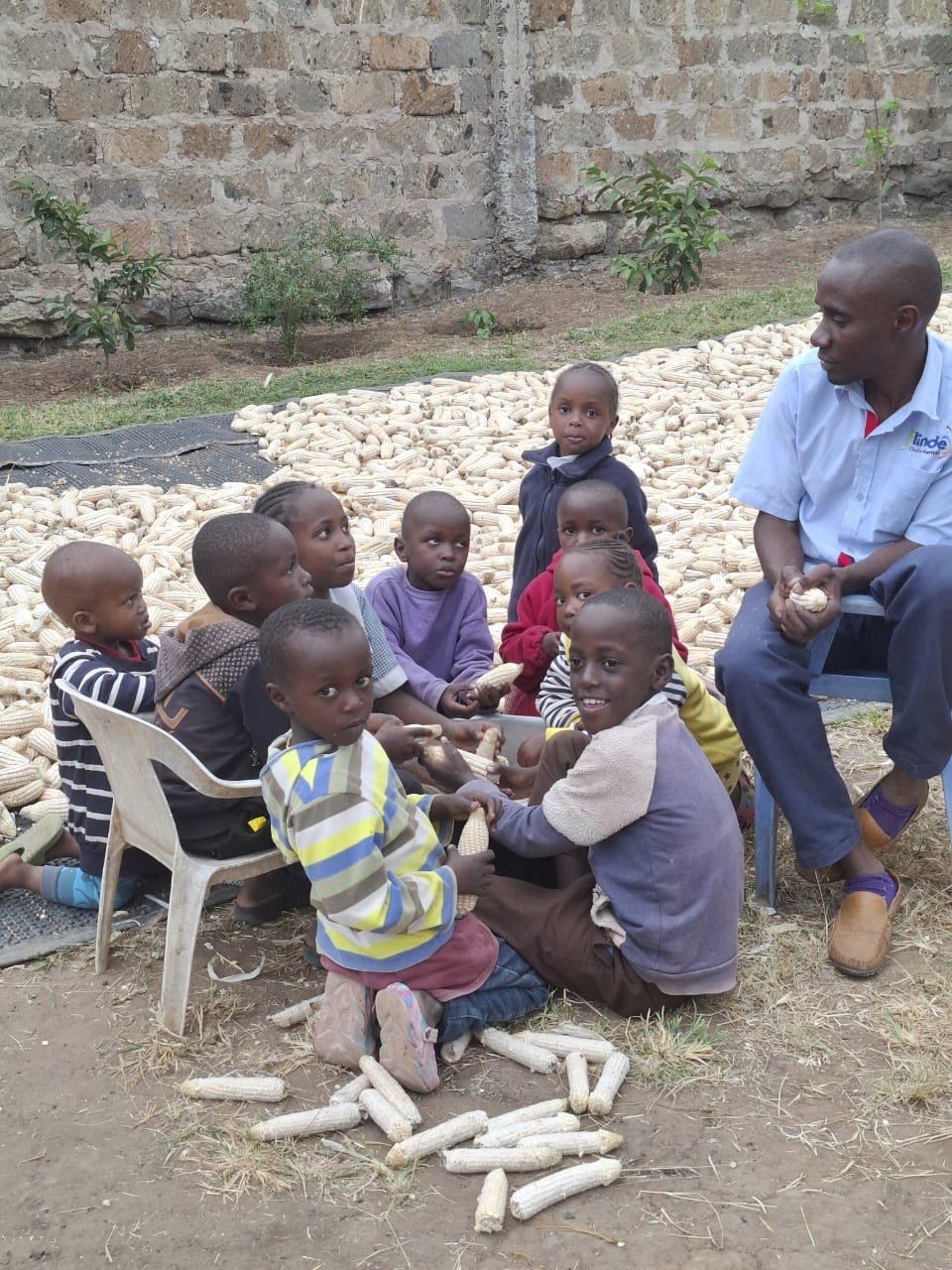
While the sun beat down relentlessly on Ngoliba, the firewood was running low and the kitchen was at risk of having to stop cooking hot meals. Almost all the children were able to spend the holidays with family outside The Ark, returned safely and went back to school.
A few important educational milestones stood out. And Caroline's team simply kept doing what it has done for years: being there, for every child, every single day.
Almost out of firewood, yet hot meals every day
It sounds almost too simple to be true, but it was July's biggest worry: a firewood shortage was looming. No firewood means no cooked meals, and at The Ark the children eat three hot meals a day. Thanks to a number of people who responded to The Ark's appeal, the kitchen kept running.
A new child
The Ark welcomed one new child, referred by Children Services in Thika East. The child immediately received care, protection and a bed.
How important are visitors?
Many visitors came by during this period — people who came to sit with the children, play with them and listen to them. For children who have rarely had solid ground under their feet, that is more than just nice: it's proof that outside The Ark's walls there are people who care about them too.
Home, and back again
When the schools closed for the holidays, the most important programme of the holiday period began: family reunification. As many children as possible spent a few weeks with family or guardians, carefully prepared and supported by the social work team. Not a casual outing, but a complex step in a longer process: rebuilding bonds, assessing whether a family is ready (again), and helping the child feel that they belong somewhere.
Not every child could go. Nine children, seven boys and two girls, stayed behind because no suitable family has yet been found for them. That remains an open question in Thika: are there families willing to open their doors, even if only for a few weeks?
Everyone who went came back with stories. Some children returned full of enthusiasm, eager to talk about the activities they had done with their relatives. Others shared stories about their families, their communities and the experiences they had during their stay.
These conversations matter, because they help caregivers and social workers understand how each child experienced the reunification. They also help identify where further support is needed as families are prepared for the possible return of their children. Family reunification doesn't simply mean sending a child home. It requires careful preparation, assessment and follow-up. It also has to be established whether the family is ready and able to provide a safe and supportive environment for the child.
After the holidays, everyone went back to school, which meant school fees, uniforms and supplies. One child started primary school, an important step in their educational journey. Two boys moved on to the next stage of their education, and a girl was about to do the same. For these children, that is no small milestone: it's proof that enough care and investment pays off.
Meanwhile, the regular work carried on: individual and group conversations with the children, home visits to families, and a board meeting to review The Ark's progress. The Ark believes that family-based care, when it is safe and in the child's best interest, can give children an important sense of belonging and identity. That is why it continues to work closely with families and the Department of Children Services to prepare children and families for a successful and lasting return home. Finally, in August, Clements was welcomed for a few weeks to work with the children and the team.

Scan or click to donate with Paypal. Choose your own amount.

Scan or click to donate with iDeal, Apple Pay or Credit card. Choose your own amount.


Mwanzo Foundation
 Mwanzo was founded in 2023 and has an ANBI status. This means that it is officially recognised by the Dutch Tax authorities as a Public Benefit Organisation. Do you want to know how this benefits you? Look at PBO
 Mwanzo has joined Donateursbelangen Look here to see how this benefits you.
| Subject | Date and Time Sent |
|---|---|
| Newsletter 05/2026 Mwanzo foundation | Saturday, 26 September 2026 |
| Newsletter 04/2026 Mwanzo Foundation | Monday, 01 June 2026 |
| Newsletter 3/2026 Mwanzo | Saturday, 18 April 2026 |